
What Common Misconception Misrepresents Bee Communication
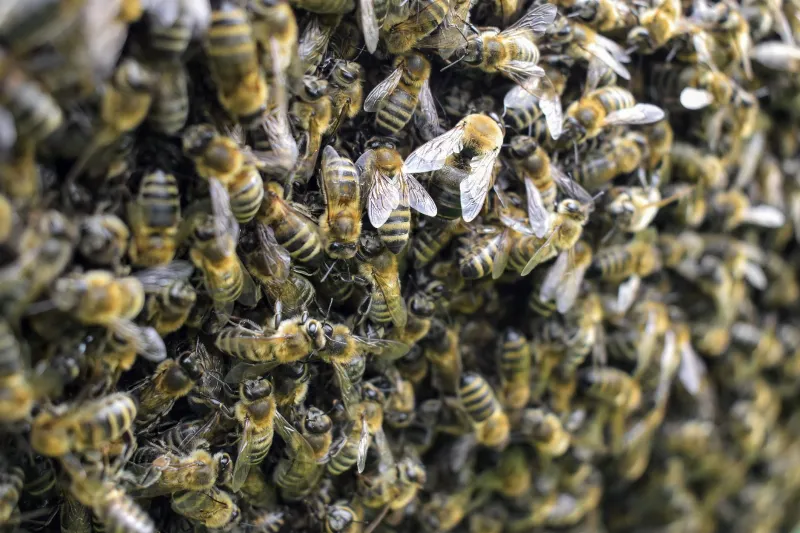

Bees Use More Than Just Dance
Commonly, people think that bees primarily communicate through their waggle dance, a fascinating behavior where they move in a specific pattern to indicate the direction and distance of food sources. This is indeed a crucial part of their communication, but it is not the whole story. Bees also use scents, known as pheromones, and vibrations to convey messages to one another.
The Role of Pheromones
When bees encounter food, they release pheromones that not only signal the presence of nectar but also help attract other bees to the food source. These chemical signals can communicate various states of the hive, such as alerting others to danger or indicating the queen's presence. This multi-faceted approach enhances their ability to work together as a colony.
The complexity of bee communication reflects a highly evolved social structure. While the waggle dance is visually spectacular and often the star of educational demonstrations, the use of pheromones highlights an intricate language that operates outside the visual realm. Bees can convey urgency or calmness depending on the type of pheromone released, adding depth to their interactions that goes beyond mere dance.
Vibrational Signals
Interestingly, bees also communicate using vibrations. Certain vibrations can signal alarm, while others may indicate the quality of a food source or the health of the hive. These vibrations are often transmitted through the substrate, such as when bees buzz around the hive, creating a sound that conveys important information about hive conditions.
This combination of visual, chemical, and vibrational communication not only showcases the intelligence of bees but also their adaptability in conveying messages effectively within their environment. Understanding this can shift our perspective on how we view these incredible creatures and the sophistication of their social interactions.
Implications for Understanding Ecosystems
Recognizing that bees utilize various communication methods emphasizes the importance of preserving their habitats. As environmental changes occur, the ability of bees to communicate and thrive can be affected, leading to broader implications for ecosystems and food production. Protecting bee populations is crucial not just for their survival but for the health of the environments they support.
In conclusion, while the waggle dance is undoubtedly a remarkable aspect of bee communication, it is essential to appreciate the full spectrum of how these insects convey information. Their use of pheromones and vibrations reveals a complex social structure that is vital for their survival and the ecosystems they inhabit.
Hungry for more?
Explore thousands of insights across all categories.
