
Power Struggles and Siege: Events Leading to Byzantine Empire's Collapse
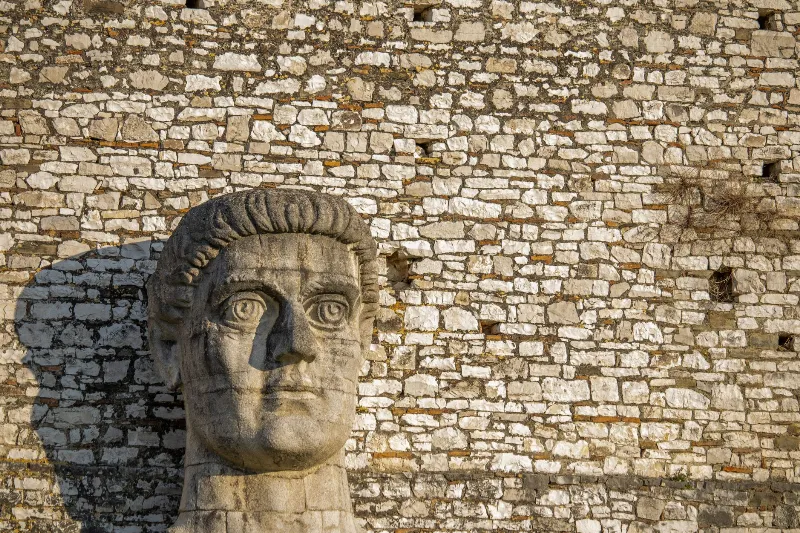

Amidst the grand architecture of Constantinople, whispers of impending doom filled the air as factions within the Byzantine Empire vied for control. This was not merely a battle for power, but a struggle that would ultimately decide the fate of a civilization. Internal divisions, exacerbated by external pressures, set the stage for an empire that was once the beacon of the Christian world.
Power Struggles and Political Intrigue
The crumbling foundations of the Byzantine Empire were laid in the 11th century when political factions began to fracture the unity that had once characterized its governance. Nobles and military leaders engaged in fierce rivalries, often resorting to violence to settle disputes. The inability of emperors to maintain a strong central authority led to a chaotic political landscape. This fragmentation weakened the empire's ability to respond effectively to external threats.
Moreover, the rise of the Seljuk Turks marked a pivotal moment. Their victories against Byzantine forces not only diminished territorial control but also instilled fear among the populace. The Battle of Manzikert in 1071 became a grim symbol of the empire's decline, as Byzantine forces faced a humiliating defeat, leading to the loss of Anatolia, a crucial region for resources and manpower.
Sieges and External Threats
As internal strife consumed the empire, external threats mounted. The Crusades, initially launched to reclaim the Holy Land, inadvertently exposed the Byzantine Empire to further danger. Western crusaders, seeking passage through Byzantine territory, often pillaged rather than assisted. The Fourth Crusade culminated in the shocking sack of Constantinople in 1204, an event that shocked the Christian world and permanently weakened the empire.
Following its temporary recovery, the Byzantine Empire struggled to reclaim its former glory. The Ottomans, emerging as a formidable power, laid siege to Constantinople in 1453. The fall of the city represented not only the end of Byzantine rule but also a significant shift in the balance of power in the region, marking the rise of Ottoman dominance.
In the aftermath of these events, the once-mighty Byzantine Empire faded into history, overshadowed by the newly established Ottoman Empire. The complex interplay of internal discord and external invasions shaped a narrative of decline that reverberates through history.
Hungry for more?
Explore thousands of insights across all categories.
