
Octopuses Showcase Remarkable Intelligence to Thrive in Diverse Habitats

Adaptive Intelligence in Action
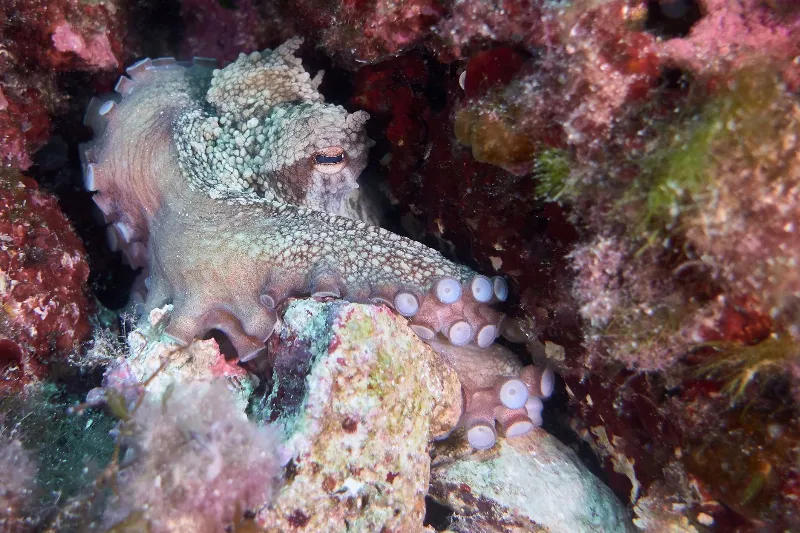
Octopuses are renowned for their remarkable intelligence, which allows them to adapt to a wide range of environments. These soft-bodied cephalopods exhibit a level of problem-solving ability that rivals many vertebrates. Whether navigating through rocky crevices or evading predators, their cognitive skills are crucial for survival.
Camouflage and Communication
One of the most fascinating aspects of octopus behavior is their ability to change color and texture. This skill is not merely for aesthetics; it serves practical purposes such as camouflage and communication. Using specialized skin cells called chromatophores, octopuses can blend seamlessly into their surroundings, making them nearly invisible to both predators and prey. This adaptive strategy highlights their advanced nervous system and situational awareness.
Learning and Memory
Research has shown that octopuses possess impressive learning capabilities. They can navigate complex mazes and even unscrew jars to access food, demonstrating both short-term and long-term memory. This capacity for learning from experiences illustrates their adaptability and intelligence, making them one of the most intriguing creatures in marine biology.
Understanding the intelligence of octopuses not only sheds light on their unique behaviors but also prompts broader questions about the evolution of intelligence across species. As researchers continue to study these remarkable animals, we gain deeper insights into the intricate ways life on Earth adapts to its challenges.
Hungry for more?
Explore thousands of insights across all categories.
