
Unraveling the Secrets Behind Petra's Discovery
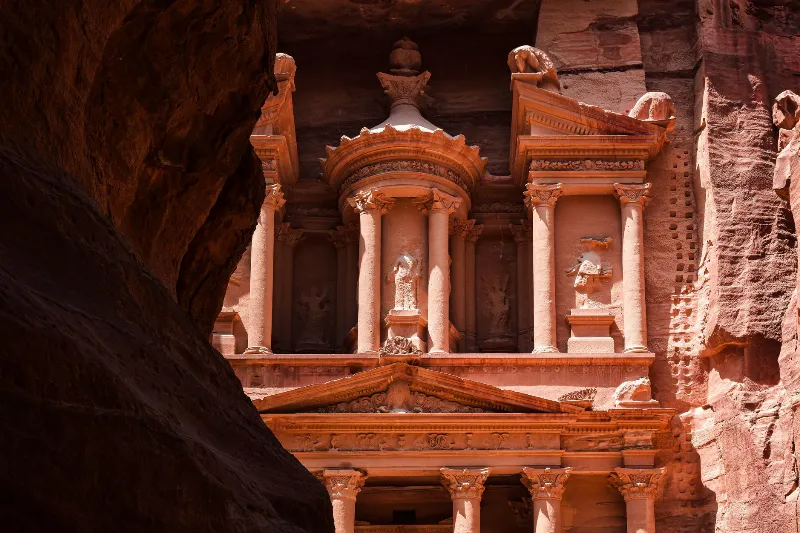

Entering Petra's Hidden Realm
Amidst the rugged mountains of southern Jordan, a narrow canyon known as the Siq leads to a breathtaking revelation. As the canyon walls close in, sunlight dances on the ancient stones, hinting at the grandeur that awaits. In 1812, Johann Ludwig Burckhardt, a Swiss explorer disguised as a Muslim pilgrim, ventured into this desolate landscape. His heart raced as he emerged from the Siq to behold the stunning façade of Al-Khazneh, or the Treasury, carved meticulously from rose-red rock.
A City Lost to Time
For centuries, Petra remained a mere whisper among travelers and traders, obscured by the sands of time and shifting political landscapes. Originally established by the Nabataeans, this thriving city was an essential hub for trade routes linking the East and West. Its strategic location allowed the Nabataeans to amass wealth and power, transforming Petra into a cultural melting pot where various influences coalesced.
However, as trade routes changed and new powers emerged, Petra's significance waned. By the late Middle Ages, the city was largely forgotten, hidden beneath layers of dust and neglect. Burckhardt's discovery ignited a spark, illuminating the intricate architecture and sophisticated water management systems that showcased the ingenuity of the Nabataeans.
Impact of Burckhardt’s Journey
Burckhardt's encounter with Petra not only unearthed its physical beauty but also reignited interest in the cultural and historical narratives of the region. His writings and sketches captivated European audiences, inspiring further exploration and archaeological endeavors. The story of Petra transitioned from a forgotten tale to a celebrated symbol of ancient ingenuity.
As explorers and archaeologists flocked to the site, they unearthed more than just stone; they regained a connection to a civilization that had once thrived. This rediscovery reshaped the Western understanding of the Middle Eastern cultures and their contributions to the tapestry of human history.
Petra today stands as a testament to the resilience of human achievement, its intricate carvings and awe-inspiring structures drawing millions to witness the artistry of a civilization long past. Burckhardt's journey marked not just the rediscovery of a city but a renewed appreciation for the stories that lay hidden beneath the surface.
Hungry for more?
Explore thousands of insights across all categories.
