
Unlocking the Secrets of Dark Matter in Our Universe
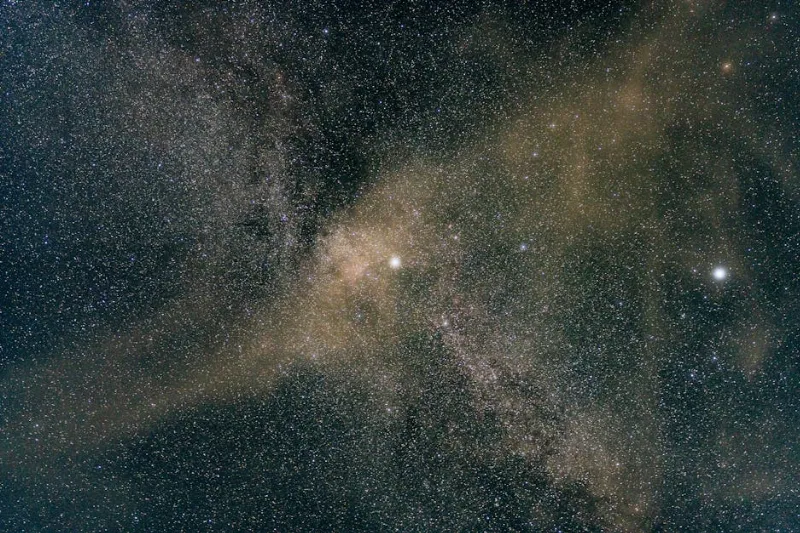

The Enigmatic Substance of Dark Matter
In the vast expanse of the universe, a hidden force governs the cosmos, and it's not made of the matter we see every day. Dark matter, an elusive substance, constitutes about 27% of the universe, yet it remains invisible and undetectable through conventional means. It's as if the universe is playing a cosmic game of hide-and-seek, and scientists are determined to uncover its secrets.
What We Do Know
First discovered through its gravitational effects, dark matter doesn't emit, absorb, or reflect light. This absence of light makes it impossible to observe directly, leading to its mysterious reputation. The evidence for its existence is compelling, though. Galaxies spin at such speeds that, without the gravitational pull of dark matter, they would tear themselves apart. So, what keeps everything together? Dark matter.
The Cosmic Web
Imagine a vast web stretching across the universe. This web, made of dark matter, forms the backbone of galaxies and galaxy clusters. The structure we see in the universe today is largely a result of dark matter’s gravitational influence. It pulls ordinary matter into clumps, leading to the formation of stars and galaxies. Without dark matter, the universe would look remarkably different, lacking the intricate structure we observe.
Dark Matter Candidates
Scientists have proposed several candidates for dark matter particles. One of the leading theories suggests that these particles could be Weakly Interacting Massive Particles (WIMPs). If WIMPs exist, they could be detected in highly sensitive experiments designed to capture their rare interactions with normal matter. However, so far, these elusive particles have evaded detection.
The Role of Research and Technology
Cutting-edge technology plays a crucial role in the quest to understand dark matter. Particle accelerators, such as the Large Hadron Collider, and advanced telescopes are used to probe the universe's secrets. Experiments deep underground aim to catch dark matter in action, while observatories capture the light from distant galaxies, helping to map the dark matter's gravitational effects.
Connecting the Dots
Recent discoveries suggest that dark matter might interact with itself in ways scientists have yet to fully understand. Some researchers even hypothesize that dark matter could have its own form of 'dark energy,' influencing cosmic expansion. This adds another layer of intrigue to the dark matter narrative, suggesting that our universe is much more complex than previously thought.
The Future of Dark Matter Research
As technology advances, our understanding of dark matter continues to evolve. International collaborations among scientists are crucial, as they pool resources and knowledge to tackle one of the universe's greatest mysteries. With projects like the European Space Agency's Euclid mission set to launch in the coming years, the hope is to shed light on dark matter's properties and its role in the cosmos.
Why It Matters
The implications of understanding dark matter extend beyond mere curiosity. The nature of dark matter influences the fate of the universe itself. Knowing more about it could help answer fundamental questions about the origin and structure of the cosmos, as well as the future of our existence. Each discovery brings us closer to understanding our place in the universe.
A Cosmic Mystery Yet to Be Solved
In the grand tapestry of the universe, dark matter remains one of the most intriguing threads. With every new piece of data, we inch closer to deciphering its role in the cosmic dance of galaxies, stars, and planets. The strange truth about dark matter is that it might just hold the key to understanding the very fabric of reality itself.
Hungry for more?
Explore thousands of insights across all categories.
