
Cultural Shifts Fueling the Rise of the Incan Empire

In a sunlit valley nestled between the Andes mountains, a small group of leaders gathered in hushed tones, their eyes fixed on a distant horizon. They spoke of alliances, of the power that could be forged through unity. This moment marked the beginning of a transformation that would give birth to one of the largest empires in pre-Columbian America, the Incan Empire.
Strategic Alliances and Military Might
The rise of the Incan Empire was not merely a series of conquests; it was a delicate dance of diplomacy and warfare. Initially, the Incas were a modest tribe, the Kingdom of Cusco, but their leaders recognized that strength lay in partnership. They forged alliances with neighboring tribes, using both persuasion and military might. The Sapa Inca, their emperor, embodied the duality of ruler and warrior, leading his people into battle while also navigating the complex web of regional politics.
This strategic approach culminated in the expansion of territory, as the Incas absorbed various cultures and peoples. Each new acquisition brought not just land but also resources and knowledge, further enhancing their military capabilities. By the time they reached the height of their power, the Incas had built a formidable army, adept at both offensive and defensive tactics.
Agricultural Innovations
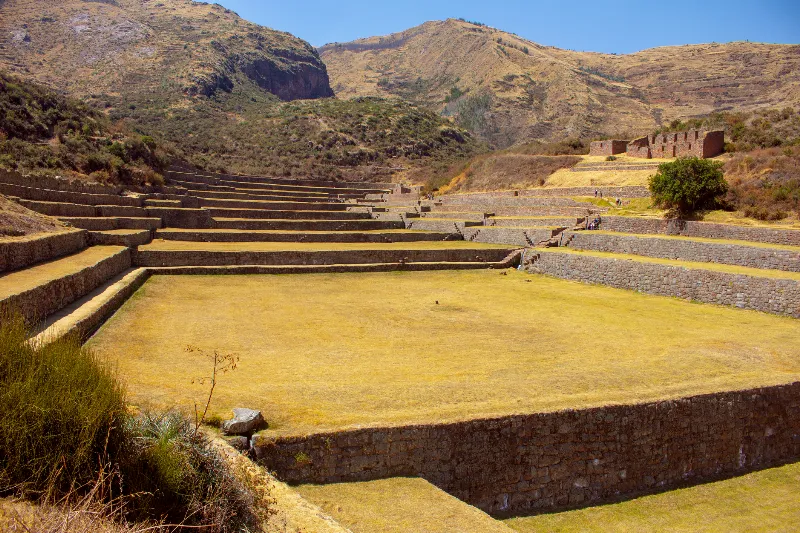
While military strength was essential, it was the ingenuity in agriculture that underpinned the empire's stability. In the harsh Andean environment, the Incas developed advanced agricultural techniques, including terrace farming and irrigation systems. These innovations allowed them to cultivate crops at various altitudes, effectively managing the diverse climates of their empire.
Through meticulous planning and community effort, the Incas not only fed their growing population but also stored surplus grains to weather potential famines. This agricultural foundation enabled the empire to thrive, providing the necessary resources for military campaigns and the construction of monumental architecture.
Cultural Integration and Infrastructure
As the Incan Empire expanded, cultural integration became a vital aspect of governance. The Incas promoted a shared identity through the worship of their sun god, Inti, and the establishment of a common language, Quechua. These efforts fostered loyalty among diverse populations, uniting them under the Incan banner.
Additionally, the empire's impressive infrastructure, road networks that spanned thousands of miles, facilitated communication and trade. These roads not only connected distant regions but also served as arteries for military movement, allowing the Incas to maintain control over their vast territories.
In the heart of the empire, as leaders considered the future, they understood that their strength lay not only in conquest but in the ability to adapt and integrate. The rise of the Incan Empire was a testament to human ambition, creativity, and the intricate interplay of culture, power, and survival.
Hungry for more?
Explore thousands of insights across all categories.
