
Cephalopods Master Camouflage Skills for Survival
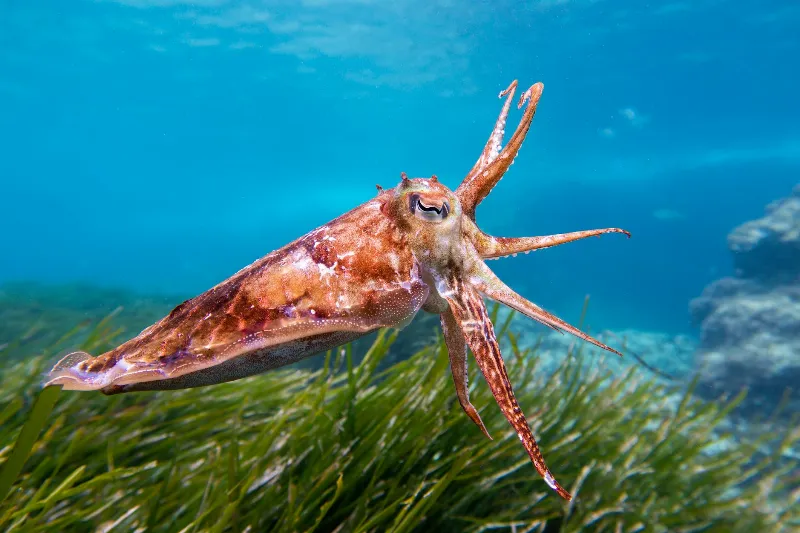

Unique Camouflage Mechanisms
Cephalopods are renowned for their exceptional ability to change color and texture, a skill that is vital for both evasion and ambush. This adaptability is primarily facilitated by specialized skin cells known as chromatophores, which contain pigments. By expanding or contracting these cells, cephalopods can alter their skin color rapidly. In addition to chromatophores, they possess iridophores and leucophores that reflect light and enhance their camouflage, making them nearly invisible against various backgrounds.
Intelligent Behavior and Environmental Adaptation
Aside from their biological features, cephalopods exhibit impressive intelligence, which plays a significant role in their camouflage tactics. They can assess their surroundings and adjust their appearance according to environmental cues, including the colors and textures present. This behavioral flexibility allows them to remain undetected by both predators and prey, showcasing a remarkable adaptation strategy that highlights their evolutionary success.
Survival Strategies in the Wild
The ability to camouflage not only aids in avoiding predators but also assists cephalopods in hunting. By blending into their surroundings, they can ambush unsuspecting prey, which is essential for their survival. Additionally, this skill helps them navigate complex habitats, such as coral reefs and rocky seabeds, where visual detection could lead to fatal encounters.
Cephalopods exemplify a fascinating intersection of biology and behavior, demonstrating how evolution shapes the survival strategies of species. Their mastery of camouflage not only protects them but also enhances their hunting efficiency, solidifying their role as adept predators in the marine ecosystem.
Hungry for more?
Explore thousands of insights across all categories.
