
What Secrets Do Planets in Our Solar System Hold
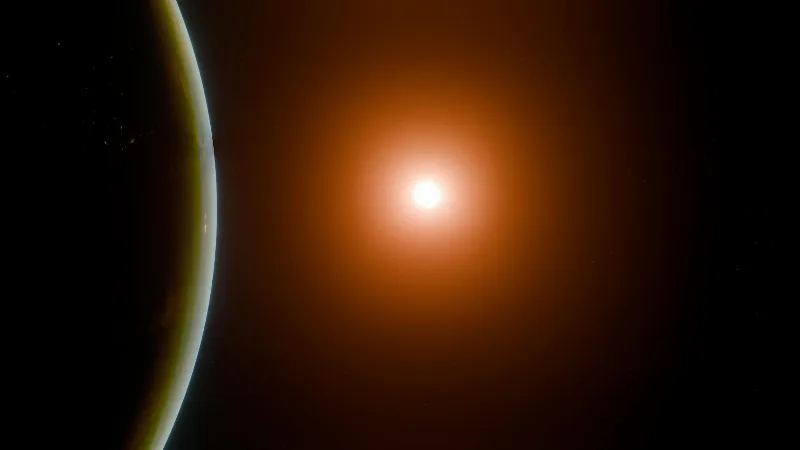

Cosmic Wonders Await
As we gaze into the night sky, the planets shimmer like distant gems, each with its own story to tell. Our solar system, a dynamic collection of celestial bodies, offers a treasure trove of secrets waiting to be uncovered. Each planet, from the blistering heat of Mercury to the icy depths of Neptune, holds mysteries that challenge our understanding of the universe.
Mercury: The Fiery Messenger
Mercury, the closest planet to the Sun, experiences extreme temperatures that range from scorching heat during the day to freezing cold at night. With no atmosphere to hold heat, this planet's surface is marked by craters and rocky plains. Its unique rotation, taking 59 Earth days to complete one turn, adds to its enigmatic nature. This small planet, only slightly larger than our Moon, serves as a reminder of the harsh conditions that exist in our solar system.
Venus: The Veiled Enigma
Often referred to as Earth's twin, Venus presents an almost unrecognizable landscape shrouded in thick clouds of sulfuric acid. This hostile environment boasts surface temperatures hot enough to melt lead, creating a pressure similar to being over a mile underwater on Earth. Despite its similarities to our planet, Venus's atmospheric conditions offer a stark contrast, highlighting the delicate balance required for life as we know it.
Jupiter: The Giant's Storm
Jupiter, the largest planet in our solar system, is a gas giant with a fascinating atmosphere dominated by swirling storms, the most famous being the Great Red Spot. This colossal storm has raged for centuries, showcasing the planet's dynamic weather patterns. With a diameter more than eleven times that of Earth, Jupiter's immense gravity also plays a crucial role in shaping the orbits of nearby moons and asteroids, making it a key player in the solar system's stability.
Saturn: The Ringed Beauty
Saturn captivates with its stunning rings, composed of ice and rock particles that create a breathtaking spectacle. These rings are not a solid structure but rather a dynamic system of countless small particles, each following its own orbit. Saturn's moons, such as Titan, the second-largest moon in the solar system, add another layer of intrigue. Titan's thick atmosphere and potential subsurface ocean make it a prime target for future exploration.
Uranus and Neptune: The Ice Giants
Uranus and Neptune, often referred to as ice giants, reveal a different aspect of planetary formation. Uranus spins on its side, resulting in extreme seasonal changes and a unique magnetic field. Neptune, with its vibrant blue color, is known for its raging winds and storms, including the fastest recorded winds in the solar system, reaching speeds of up to 1,500 miles per hour. These distant worlds challenge our perceptions of what planets can be.
Reflecting on the Cosmos
Each planet in our solar system holds secrets that contribute to our understanding of the universe. Their unique characteristics and conditions remind us of the rich diversity of celestial bodies beyond our own. As we continue to explore, these planets will unveil more of their mysteries, enriching our knowledge of the cosmos and our place within it.
Hungry for more?
Explore thousands of insights across all categories.
