
What If Trees Don't Whisper Secrets But Share Resources Instead

Trees Engage in Resource Sharing
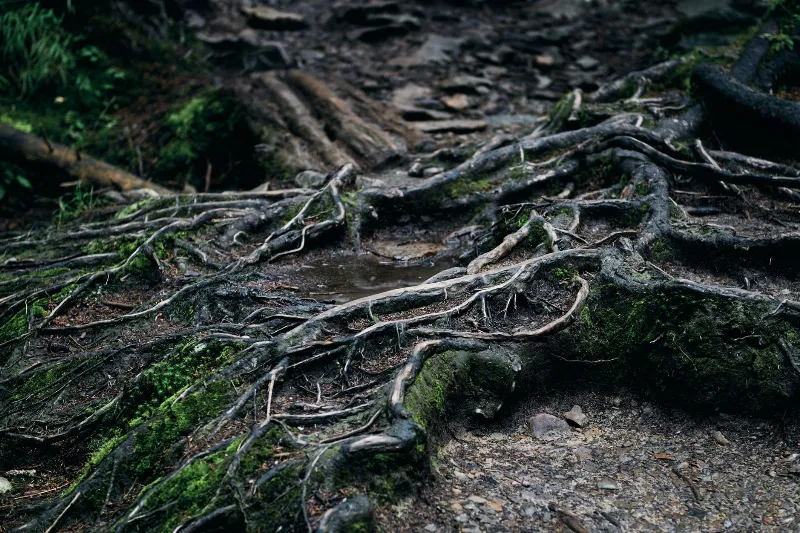
Contrary to the popular belief that trees communicate through secretive signals or whispers, recent studies reveal a more collaborative reality. Trees primarily engage in a resource-sharing network, often referred to as the 'Wood Wide Web.' This intricate underground network of mycorrhizal fungi connects tree roots, allowing for the transfer of nutrients, water, and even chemical messages.
Mycorrhizal Networks and Their Role
Mycorrhizal fungi form symbiotic relationships with tree roots, creating an extensive network beneath the forest floor. This partnership enables trees to share resources, such as carbon and nitrogen, with one another. For example, older trees often provide younger saplings with essential nutrients, enhancing their survival rates. This mutual support not only benefits individual trees but also strengthens the entire ecosystem.
Interestingly, trees can also send distress signals through these fungal networks. When a tree is attacked by pests, it may release specific chemicals into the network, warning neighboring trees to bolster their defenses. However, this process is less about direct communication and more about resource allocation and survival strategies.
Implications for Forest Health
This collaborative behavior among trees has profound implications for forest health and biodiversity. By sharing resources, trees can withstand environmental stressors better, such as droughts or diseases. This interconnectedness fosters resilience, enabling forests to thrive even under challenging conditions.
Understanding this perspective shifts our view of forests from solitary organisms to interconnected communities. It highlights the importance of preserving these networks for maintaining healthy ecosystems.
In essence, while trees may not whisper secrets to each other, their collaborative efforts speak volumes about the complexity of forest ecosystems. Their ability to share resources reveals an intricate web of life that is as vital as it is fascinating.
Hungry for more?
Explore thousands of insights across all categories.
