
What Happens When a Star Explodes in a Supernova?
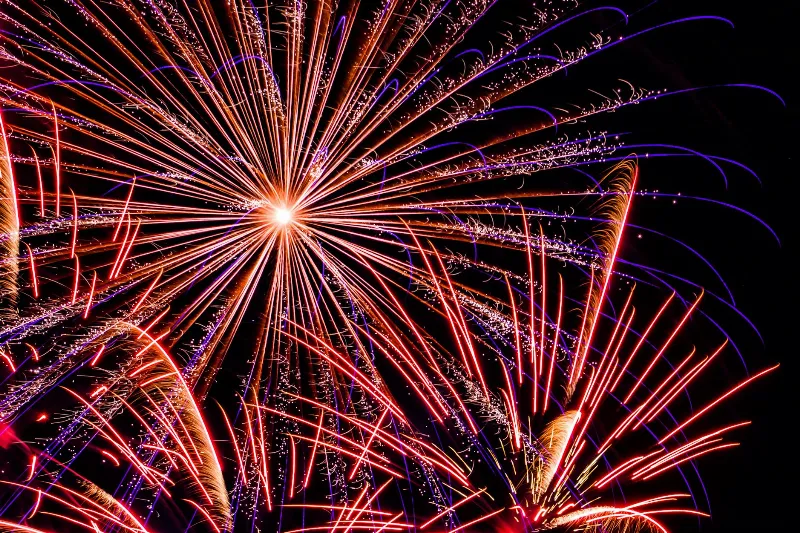

The Cosmic Fireworks
When you look up at the night sky, do you ever wonder what happens to stars when they meet their end? A supernova is one of the most spectacular events in the universe, and it’s not just a pretty light show. It's a cosmic explosion that marks the death of a massive star. This phenomenon is both mesmerizing and terrifying, a reminder of the violent forces that shape our universe.
Imagine a star at least eight times more massive than our sun. As it exhausts its nuclear fuel, the core collapses under its own gravity. This collapse triggers a catastrophic explosion that can outshine entire galaxies for a brief period. Yes, for a few weeks, a single star can become brighter than all the stars in its galaxy combined!
The Anatomy of a Supernova
So, what exactly happens during a supernova? The process begins long before the explosion occurs. Inside the dying star, nuclear fusion creates heavier elements. When the star can no longer produce energy through fusion, gravity takes over. The core collapses, and the outer layers are expelled violently into space. This expulsion creates shock waves that heat the surrounding gas, causing it to glow brilliantly.
Interestingly, there are two main types of supernovae: Type I and Type II. Type I supernovae occur in binary systems, where a white dwarf star pulls material from a companion star until it reaches a critical mass. Type II supernovae, on the other hand, happen when massive stars run out of fuel. The difference is crucial for astronomers trying to understand the universe's evolution.
Why Supernovae Matter
These cosmic explosions do more than dazzle observers. They play a critical role in the universe. Supernovae are responsible for distributing heavy elements into space, elements that are essential for life as we know it. Think about it: gold, silver, and even the iron in your blood were once forged in the hearts of massive stars.
After a supernova, the remnants can form nebulae, where new stars and planets are born. The cycle of stellar life and death contributes to the dynamic nature of our universe. Each supernova enriches the interstellar medium, providing the building blocks for future generations of stars.
The Enigmatic Aftermath
What remains after a star explodes? In many cases, a neutron star or a black hole is left behind. Neutron stars are incredibly dense, with a mass greater than the sun packed into a sphere the size of a city. Black holes, however, are even more mysterious, regions of space where gravity is so strong that not even light can escape.
Scientists use telescopes to observe supernova remnants, enabling them to study the materials ejected during the explosion. This research helps us understand the life cycles of stars and the chemical evolution of galaxies. The remnants of these explosions are often observed in various wavelengths, from radio to X-rays, revealing details about the explosion’s mechanics and the materials involved.
Conclusion: A Starry Future
Supernovae are not just explosions; they are the universe's way of recycling. They remind us of the transient nature of existence, both in the cosmos and on Earth. As we gaze at the stars, we should remember that they too have their life stories, filled with beginnings and endings, illuminating the vast tapestry of the universe.
Hungry for more?
Explore thousands of insights across all categories.
