
Thinking, Fast and Slow - Daniel Kahneman
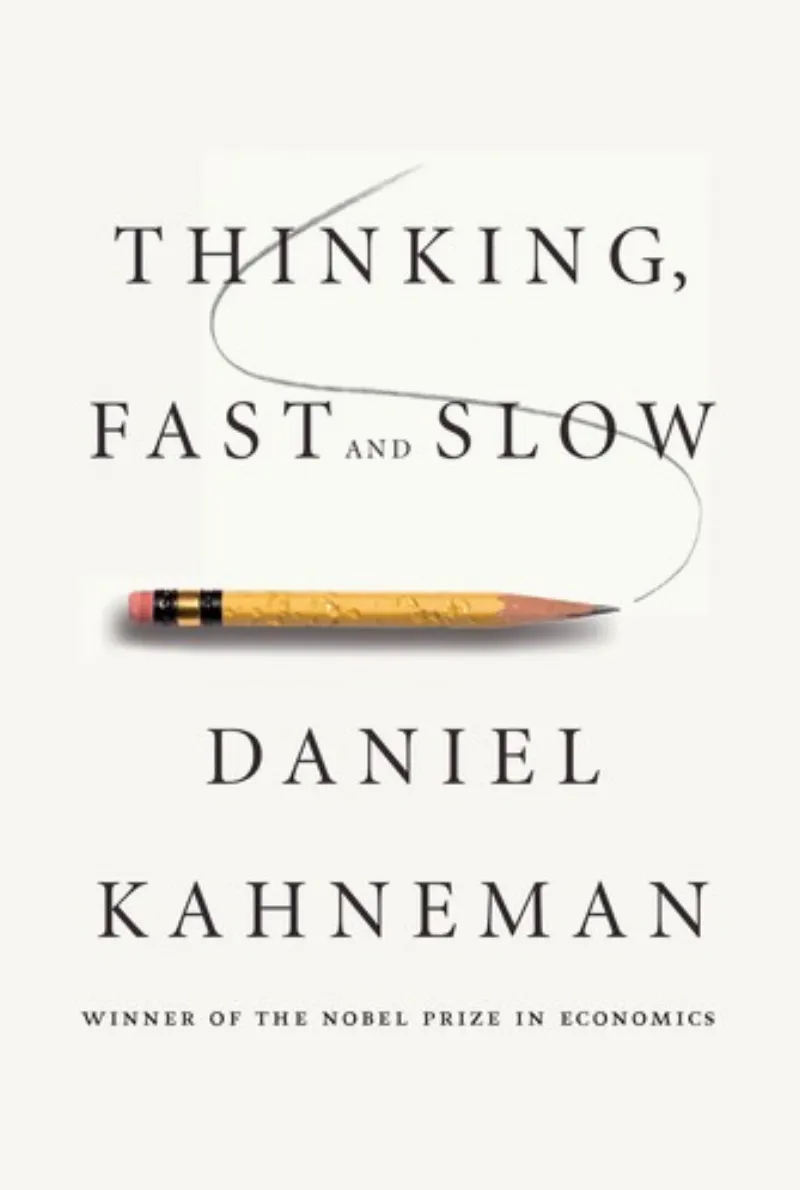

Understanding the Mind
The book presents a deep dive into the two systems of thought that govern human behavior: System 1, which is fast and intuitive, and System 2, which is slower and more deliberate. Kahneman illustrates how these systems interact, often leading to cognitive biases that can cloud our judgment.
Key Concepts and Events
Kahneman outlines various experiments and scenarios to demonstrate how our brains process information. He discusses topics such as:
- The anchoring effect, where initial information unduly influences subsequent judgments.
- Loss aversion, which shows that people prefer to avoid losses rather than acquire equivalent gains.
- Overconfidence, where individuals overestimate their knowledge or predictive abilities.
- The availability heuristic, which leads us to judge the frequency of events based on how easily examples come to mind.
These concepts illustrate the flaws in our reasoning and the ways our environment and experiences shape our thinking.
Character Motivations
While the book focuses on concepts rather than characters, the narrative is driven by real-world applications. Kahneman himself, along with other researchers, serves as a guiding voice, sharing insights from psychology and behavioral economics. Their motivation is clear: to empower readers to recognize their own cognitive biases and improve decision-making.
Conclusion
The overarching message of 'Thinking, Fast and Slow' is the importance of understanding how we think. Kahneman encourages readers to be more aware of their thought processes and the inherent biases that can lead to poor decision-making. This awareness can foster better choices in both personal and professional contexts, leaving readers with valuable tools for navigating a complex world.
Hungry for more?
Explore thousands of insights across all categories.
