
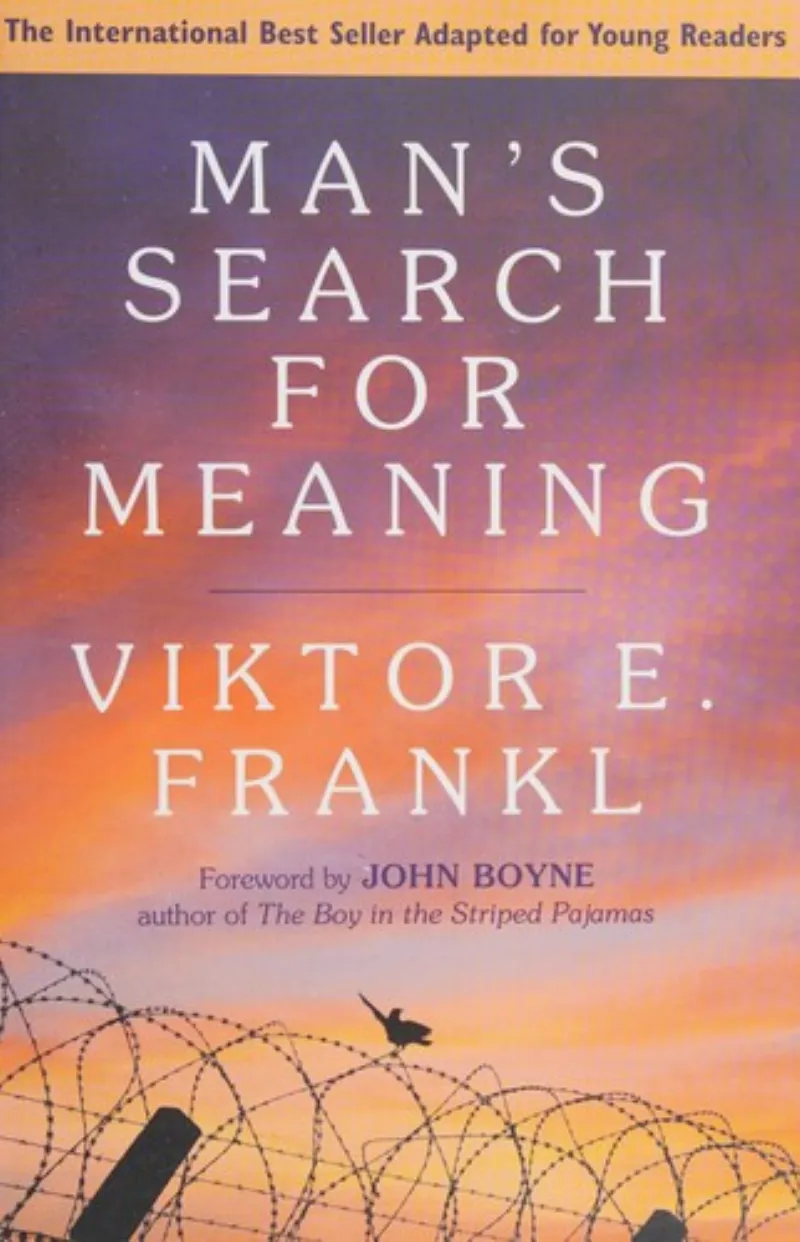
Man's Search for Meaning - Viktor E. Frankl

Background and Arrival at Auschwitz
Viktor E. Frankl was arrested in Vienna in 1942 and transported to Auschwitz, one of the most notorious Nazi concentration camps. Upon arrival, he was stripped of his possessions and separated from his family, many of whom were sent to their deaths. This brutal initiation marked the beginning of his harrowing journey through the camp system, where he grappled with the loss of freedom and faced the daily threat of death.
Life in the Concentration Camps
Once imprisoned, Frankl endured the harsh realities of camp life, including starvation, forced labor, and the constant presence of death. He observed the various responses of his fellow prisoners to their suffering, noting that some succumbed to despair while others maintained a vestige of hope. This observation became crucial as he reflected on the human capacity to find meaning even in the direst circumstances.
Psychological Observations
Frankl began to document the psychological responses of inmates to their experiences in the camps. He identified three main stages of psychological reactions: shock during the initial admission, apathy as a response to the daily horrors, and the reaction of depersonalization and moral deformity. Frankl's analysis highlighted the importance of maintaining a sense of purpose to survive the psychological toll of the camps.
Finding Meaning in Suffering
Throughout his ordeal, Frankl discovered that meaning could be found in suffering. He posited that individuals could choose their attitude toward unavoidable suffering. This revelation led him to develop his idea of 'logotherapy', which emphasizes the pursuit of meaning as a central human motivation. He believed that those who have a why to live can bear almost any how.
Post-War Reflections
After being liberated in 1945, Frankl returned to Vienna, where he resumed his work as a psychiatrist. He published 'Man's Search for Meaning', which detailed his experiences in the concentration camps and introduced his psychological theories. The book became a bestseller and has since been translated into multiple languages, resonating with readers seeking purpose in their lives.
Legacy and Impact
Frankl's insights into the human condition have had a profound impact on psychology and philosophy. His ideas encourage individuals to find meaning in their lives, regardless of their circumstances. 'Man's Search for Meaning' continues to inspire millions, offering a message of hope and resilience.
Hungry for more?
Explore thousands of insights across all categories.
