
Octopuses Exhibit Advanced Problem-Solving Abilities
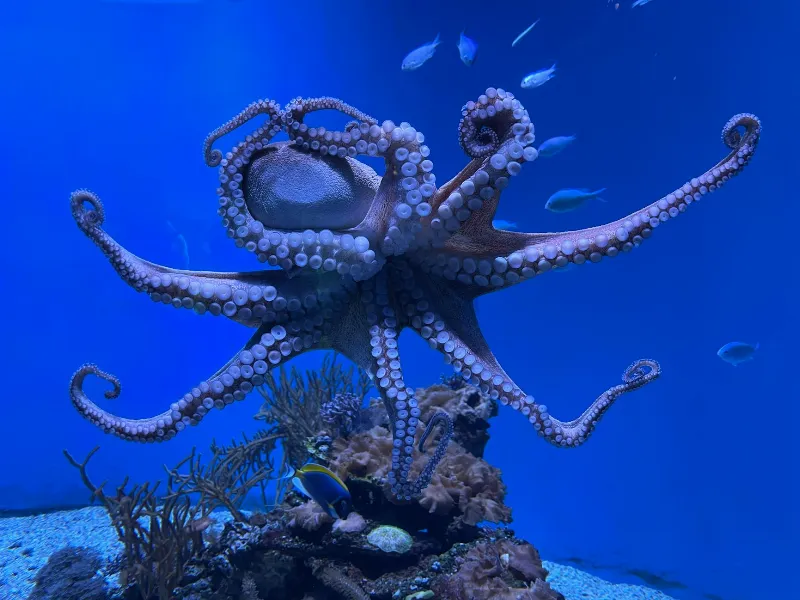

Octopuses are known for their remarkable intelligence, often surprising researchers with their ability to navigate complex environments. These cephalopods possess a unique neural architecture that allows them to perform intricate tasks, showcasing a level of problem-solving skills that rivals many vertebrates. Their behavior provides a fascinating glimpse into the cognitive capabilities of non-mammalian species.
Unique Learning Strategies
One of the most intriguing aspects of octopus intelligence is their capacity for learning through observation and experience. Octopuses can engage in behaviors such as tool use, a skill previously thought to be exclusive to humans and a few other species. For instance, they have been observed using coconut shells and shells as shelters or shields, demonstrating not only problem-solving but also an understanding of their environment.
- Tool use for protection and camouflage.
- Learning from environmental interactions.
- Ability to escape from enclosures by manipulating locks and latches.
Adaptability and Flexibility
In addition to their learning abilities, octopuses exhibit remarkable adaptability. They can change their color and texture to blend into their surroundings, a skill that aids not only in evasion from predators but also in ambushing prey. This adaptability extends to their problem-solving approaches; octopuses can modify their strategies based on the challenges they face, showcasing a flexible mindset that is essential for survival in dynamic environments.
Research indicates that octopuses are capable of short-term memory, allowing them to recall past experiences and apply that knowledge to new situations. This cognitive flexibility is vital for navigating the diverse and often hazardous marine ecosystems they inhabit.
Studying octopus intelligence not only enhances our understanding of their species but also provides insights into the evolution of intelligence across the animal kingdom. Their unique problem-solving abilities challenge traditional views of cognition and highlight the complexity of non-mammalian brain functions.
Hungry for more?
Explore thousands of insights across all categories.
