
Migrating Birds Navigate Using Earth's Natural Signals

Cues for Navigation
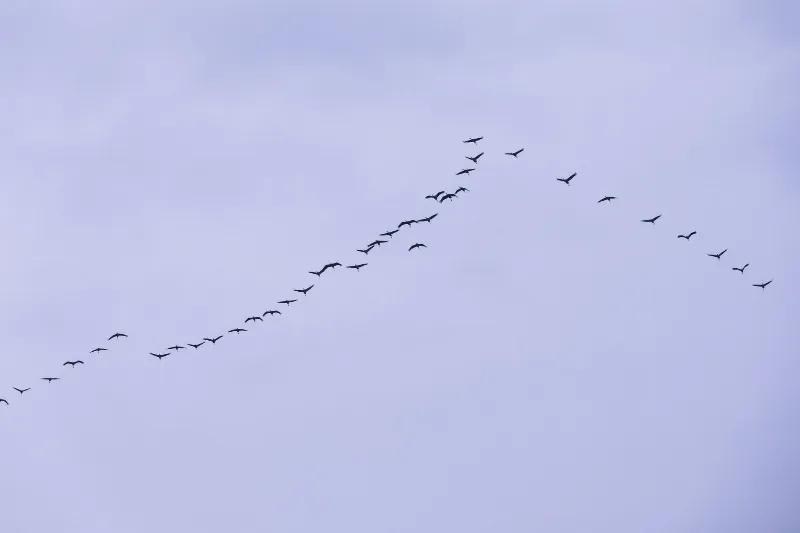
Migrating birds possess extraordinary abilities to navigate across thousands of miles. Their journey is influenced by various environmental signals that help them determine their direction and distance. Birds utilize three primary types of cues: celestial navigation, geomagnetic orientation, and visual landmarks.
Celestial Navigation
Birds often rely on the position of the sun and stars to guide their way. During the day, they can use the sun's position in the sky as a compass, adjusting their flight path based on its movement. At night, birds such as the indigo bunting utilize stellar positions to maintain their course. This ability suggests an innate understanding of celestial patterns, allowing them to travel even in the absence of visible landmarks.
Magnetic Orientation
Another fascinating aspect of bird navigation is their sensitivity to Earth's magnetic field. Many species possess specialized cells containing magnetite, which allows them to detect magnetic fields. This magnetic sense provides a reliable reference for direction, especially during overcast conditions when celestial cues are obscured. Research indicates that birds can perceive variations in the magnetic field, effectively creating an internal map that guides them on their migratory paths.
Visual Landmarks
As birds approach their destination, they often switch to using visual landmarks such as mountains, rivers, and coastlines. This method enhances their navigation accuracy, particularly in familiar territories. Birds learn and remember these landmarks, which can provide crucial assistance when adjusting their flight paths during migration.
The combination of these navigation skills showcases the incredible adaptations birds have developed over millions of years. Their ability to traverse vast distances with precision highlights the complexities of migration. Each year, millions of birds embark on their journeys, demonstrating not just instinct but a remarkable understanding of the world around them.
Hungry for more?
Explore thousands of insights across all categories.
