
Birds Use Unique Signals To Communicate During Migration

Communication Signals in Migration
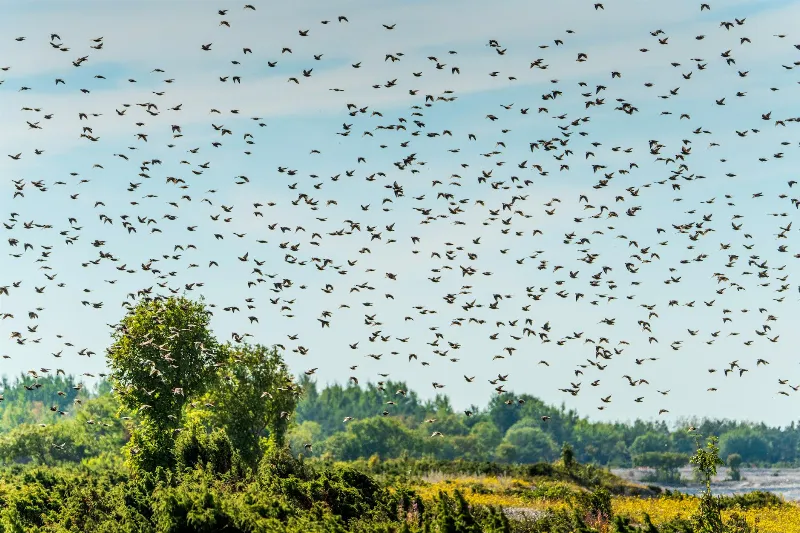
Bird migration is a complex phenomenon, marked by significant distances and diverse environmental challenges. Through unique communication signals, birds maintain social cohesion and ensure successful navigation. Vocalizations are particularly important; these calls can convey information about location, danger, and social interactions among flocks. For instance, songbirds often utilize specific calls to alert others when they find food or to signal the presence of predators.
Types of Communication Signals
Birds employ various communication methods during migration:
- Vocalizations: Many species, such as geese and swans, have distinct calls that help maintain group formation during flight.
- Visual Displays: Birds use body language, such as wing flaps or head movements, to communicate intentions, especially in mixed-species flocks.
- Chemical Signals: Some species utilize scent to relay information about reproductive status or territory, although this is less common during migration.
These signals are essential for coordinating movements and ensuring that all members of the flock are aligned in their migratory paths.
Impact of Communication on Migration Success
The ability to communicate effectively during migration can significantly enhance survival rates. Birds that can share information about food sources or potential hazards are better equipped to cope with the challenges of long-distance travel. This communication also fosters social bonds within flocks, allowing for more organized and efficient migratory patterns. In essence, these signals not only facilitate navigation but also reinforce the social fabric of avian communities.
As research continues to uncover the intricacies of bird communication, it becomes evident that these methods are vital not just for migration but also for understanding the broader ecological relationships that define avian life.
Hungry for more?
Explore thousands of insights across all categories.
