
Interstellar Colonization: The Next Frontier in Human Expansion
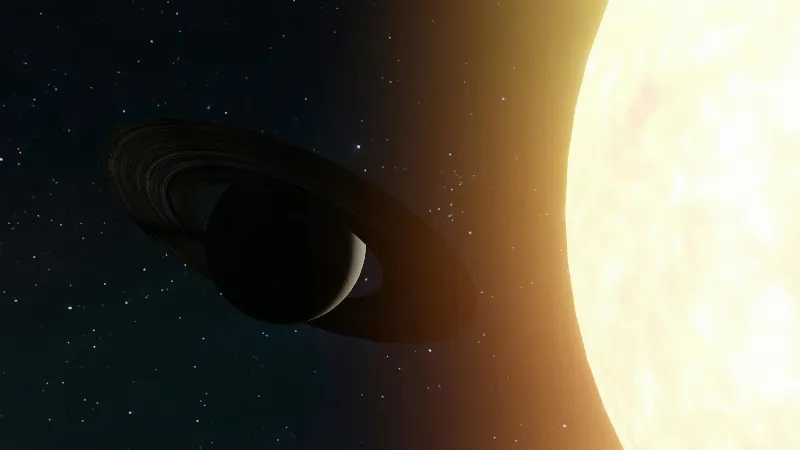

As we ponder over the vastness of the universe, the idea of interstellar colonization emerges as a tantalizing possibility. The stars that shimmer in our night sky are not merely distant points of light; they represent new worlds ripe for exploration and habitation. With technological advancements and a deeper understanding of space, humanity could soon embark on a quest to establish colonies beyond our solar system, forever altering the course of our species.
The Allure of the Stars
Imagine a future where humans can travel to star systems light-years away, potentially inhabiting exoplanets that may harbor life or offer habitable conditions. The closest star system, Alpha Centauri, lies about 4.37 light-years from Earth, a distance that, while daunting, is becoming more conceivable with proposed spacecraft designs like Breakthrough Starshot. These tiny, light-propelled probes could reach a fraction of the speed of light and provide invaluable data on potential new homes.
Technological Innovations: The Key to Expansion
To realize interstellar colonization, we must harness groundbreaking technologies. Concepts such as nuclear fusion propulsion, antimatter drives, and even theoretical wormholes present exciting possibilities for reducing travel time across vast cosmic distances. For instance, a fusion-powered spacecraft could potentially reach speeds of up to 10% the speed of light, allowing us to traverse Alpha Centauri in just over 40 years. This would transform our approach to space travel and make the once-unimaginable a reality.
Understanding Exoplanets: Our Next Homes
Recent discoveries of exoplanets in the habitable zones of their stars have illuminated the path forward. Planets like Proxima Centauri b, located within the Alpha Centauri system, present tantalizing prospects for colonization. With conditions that may allow for liquid water, these worlds could serve as the foundation for human life beyond Earth. Ongoing missions, such as the Transiting Exoplanet Survey Satellite (TESS), are crucial in identifying these celestial candidates and assessing their viability.
The Challenges Ahead: Survival in the Void
While the dream of interstellar colonization is captivating, it is not without significant challenges. The harsh realities of space travel, radiation exposure, psychological stress, and the need for sustainable life-support systems, must be addressed. Developing closed-loop ecosystems that recycle air and water, along with advanced medical technologies to counteract the effects of prolonged spaceflight, will be essential for the survival of human colonies in distant star systems.
Ethical Considerations: Our Responsibility as Cosmic Citizens
As we consider the colonization of other worlds, ethical implications arise. How do we approach the potential existence of extraterrestrial life? What responsibilities do we hold towards untouched ecosystems? These questions must guide our endeavors into the cosmos, ensuring that we act as stewards rather than conquerors. Establishing a framework for ethical exploration will pave the way for harmonious coexistence in the universe.
Conclusion: The Dawn of a New Era
Interstellar colonization embodies the next frontier of human expansion, a bold step toward a future where our species thrives among the stars. As we harness advanced technologies and address the challenges of space travel, we inch closer to realizing this dream. The journey will undoubtedly reshape our understanding of life, our universe, and what it means to be human. Together, we must continue to explore, innovate, and reach for the stars.
Hungry for more?
Explore thousands of insights across all categories.
