
How Do Animals Use Memory for Survival

Memory's Role in Survival
Memory is not just a human trait; it is vital for many animals in their quest for survival. For instance, migratory birds rely on their memory to navigate long distances, remembering landmarks and routes they’ve taken in previous migrations. This ability to recall specific locations helps them find food sources and suitable nesting areas year after year.
Spatial Memory in Animals
Many species exhibit remarkable spatial memory, allowing them to create mental maps of their environments. This skill is especially prominent in rodents, such as rats, which can remember the layout of mazes and the locations of food. Research indicates that they utilize specific brain structures, like the hippocampus, which is essential for forming and storing these spatial memories.
Example: Elephants and Waterholes
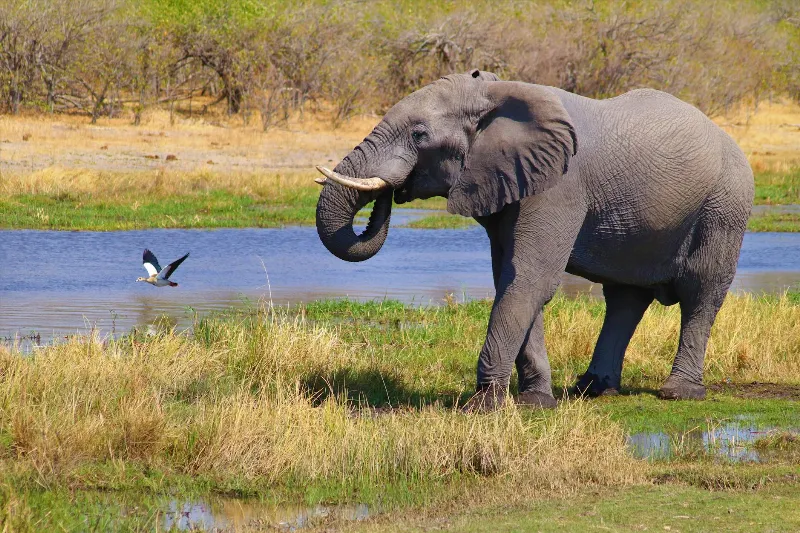
Elephants are well-known for their impressive memory. They can remember the locations of waterholes and food sources over long periods, even across vast distances. This ability is crucial during dry seasons when resources become scarce. Their social structure also benefits from memory, as elephants can recognize and remember other individuals for years.
Learning from Experiences
Animals also use memory to learn from experiences. For example, some birds, like crows, can remember which humans are friendly or threatening. This learned behavior helps them avoid danger and increases their chances of survival. Such adaptive memory showcases the intelligence of these creatures and their capacity to navigate complex social dynamics.
Memory and Foraging
In species like squirrels, memory plays a key role in foraging. Squirrels bury nuts in various locations to prepare for winter. They rely on their memory to relocate these hidden food caches later. This behavior not only demonstrates their survival strategies but also contributes to forest regeneration, as some buried nuts grow into new trees.
Conclusion
Animals’ use of memory for survival illustrates the intricate relationships they maintain with their environments. Their ability to learn, recall, and apply past experiences is a fascinating aspect of animal behavior, reflecting their adaptability and intelligence.
Hungry for more?
Explore thousands of insights across all categories.
