
Why Your Brain Fears Uncertainty More Than Failure?
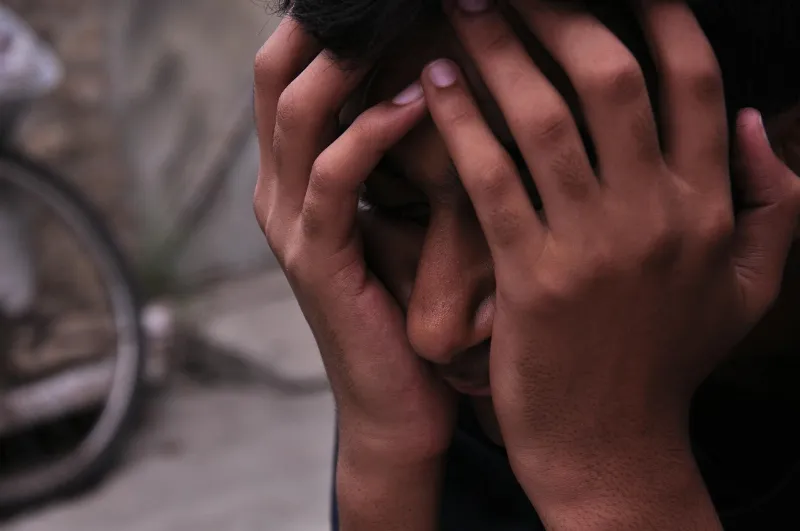

The Hidden Trap of Uncertainty
Have you ever noticed how your brain seems to fear the unknown far more than it fears failure? It’s a strange and fascinating aspect of human psychology that can leave many of us puzzled. As we navigate through life, we often find ourselves confronted with choices, some familiar and safe, others wrapped in a thick veil of uncertainty. When faced with this ambiguity, our minds can spiral out of control, leading us to make decisions that aren’t always rational. This isn’t merely a quirk of our psyche; it’s a survival mechanism that has been ingrained in us through the ages.
Picture yourself standing at the edge of a cliff. The ground beneath your feet is solid, yet the thought of jumping into the unknown below sends chills down your spine. Why does this happen? It’s not the act of jumping itself that paralyzes you; it’s the unpredictability of what awaits you in the depths below. What if you land safely? What if you don’t? The abyss represents all that is unknown and potentially dangerous.
The Brain's Survival Instinct
Our brains have evolved through eons of human history to prioritize our safety. In the past, early humans faced perilous situations daily. A rustling in the bushes could mean the presence of a predator lurking nearby or simply the wind playing tricks. This constant need to assess threats meant our minds had to be hyper-vigilant, always on the lookout for danger. This instinct, while crucial for survival in ancient times, manifests today as a profound fear of uncertainty.
Consider this: failure is often perceived as a manageable outcome. It’s something you can recover from. You can learn from your mistakes, adapt, and move on. Uncertainty, on the other hand, traps you in a state of limbo. It creates a heavy weight on your chest, constricting your ability to breathe, to think, and to act decisively. This paralyzing sensation can prevent you from making choices that could lead to growth and discovery.
The Uncertainty Paradox
Let’s delve deeper into this paradox. When confronted with two choices, one being safe and familiar, the other unknown, most individuals will instinctively choose the familiar path, even if it leads to failure. The paradox here is striking. Failure is tangible and understandable; it’s a known quantity that we can work with. Uncertainty, however, is an enigma wrapped in a riddle. It thrives in the shadows, elusive and confusing.
Think about it. You’ve likely heard countless tales of entrepreneurs who have failed spectacularly yet emerged stronger, wiser, and more resilient. They often recount their failures as valuable lessons learned on the road to success. But how many stories can you remember of individuals frozen in indecision, unable to act because of their fear of the unknown? Countless, I bet. This highlights that uncertainty can be more debilitating than outright failure.
The Science Behind the Fear
Research in psychology has shed light on how our brains react to uncertainty. Studies show that when we face unpredictable scenarios, specific areas of the brain activate, particularly the anterior insula. This region is responsible for our emotional responses and lights up like a Christmas tree when we encounter uncertainty. It’s almost as if our brain is screaming, “Danger!” even when there’s no immediate threat. This results in overwhelming feelings of anxiety and apprehension.
Conversely, when we experience failure, the brain processes it differently. There’s a sense of closure, a beginning and an end. You can analyze what went wrong, confront the failure, learn from it, and ultimately move on. Uncertainty, however, lacks this clarity. It keeps us guessing, trapped in a loop of ‘what ifs’ that can be paralyzing. The fear of the unknown can become a cage, holding us back from pursuing our dreams.
Breaking the Cycle of Fear
So, how do we break free from this cycle of fear that grips us? First and foremost, it’s essential to acknowledge that uncertainty is an inherent part of life. It’s part of the human experience, and embracing it can lead to personal growth. Accepting discomfort as a natural state can be a powerful catalyst for change.
Mindfulness can be a helpful tool in navigating the turbulent waters of uncertainty. Grounding yourself in the present moment can ease the anxious racing of your mind. When anxiety threatens to overwhelm, take a deep breath. Refocus your thoughts. This simple act can help reduce the grip of anxiety and bring you the clarity you need to move forward. Remember, every great achievement was once viewed as impossible. The unknown can indeed lead us to remarkable discoveries.
The Freedom of Accepting Uncertainty
By accepting uncertainty, you unlock a world of new experiences. Yes, you might fail. You might stumble along the way. But with each misstep, you will also learn valuable lessons. And that’s the beauty of life. The brain may instinctively fear uncertainty, but you possess the power to redefine your relationship with it. Take the leap. Embrace the unknown.
Life is an adventure, filled with twists and turns. The greatest stories often emerge from the most unexpected places. So don’t let fear of the unknown hold you back. Instead, let it propel you forward into the uncharted territories of your life. Embrace uncertainty, for it’s within those uncertain moments that true growth and discovery await.
Hungry for more?
Explore thousands of insights across all categories.
