
Sulfur's Hidden Role: Why Volcanic Emissions in Iceland Are Reshaping Climate Models
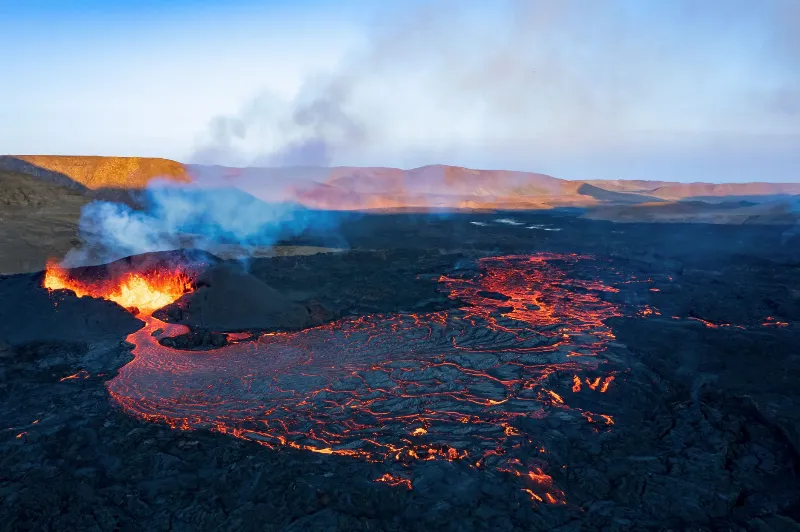

Volcanic Sulfur Emissions: An Overlooked Player
Volcanic eruptions in Iceland, particularly from the Bárðarbunga and Eyjafjallajökull volcanoes, release massive amounts of sulfur dioxide (SO2) into the atmosphere. This sulfur emission has been largely underestimated in climate models. Why is this chemical so crucial?
Understanding Sulfur Dioxide's Role
Sulfur dioxide, when released into the atmosphere, undergoes a series of transformations:
- Conversion into sulfate aerosols, which reflect sunlight back into space.
- Increased cloud condensation nuclei, leading to cloud formation.
- Potential cooling effects on global temperatures, offsetting some greenhouse gas warming.
These processes contribute significantly to atmospheric dynamics, yet climate models have often disregarded volcanic contributions.
Impact on Climate Models
Recent studies indicate that incorporating sulfur emissions from Icelandic volcanoes into climate models could lead to a re-evaluation of global temperature projections. A shocking finding suggests that the cooling effect from these emissions might balance out some of the warming caused by CO2 emissions.
“The unexpected cooling effect of volcanic sulfur emissions could mean our climate models are fundamentally flawed,” says Dr. Helena Björnsdóttir, a climatologist specializing in atmospheric sciences.
Key Findings from Recent Research
Research published in the journal Nature Climate Change indicates several critical insights:
- Increased volcanic activity correlates with significant drops in regional temperatures.
- SO2 emissions from Iceland can influence global climate patterns, extending far beyond the North Atlantic region.
- Failure to account for these emissions may lead to overestimating future global warming scenarios.
Scientists are now urging a recalibration of models to include volcanic sulfur emissions, positing that failure to do so could lead policymakers astray.
Future Implications
What does this mean for climate policy and action? If volcanic sulfur emissions truly have the cooling potential researchers claim, then:
- Global climate agreements may need to account for natural sources of climate variability.
- Investments in carbon reduction strategies might require re-evaluation based on more accurate climate impacts.
- Enhanced monitoring of volcanic activity will become crucial in climate modeling.
As the world grapples with climate change, understanding every factor influencing our atmosphere becomes paramount.
Conclusion? Not Yet
While the implications are profound, it's essential to continue investigating the complex interactions between volcanic activity and climate systems. Scientists are only beginning to scratch the surface of sulfur’s hidden role in our atmosphere.
Hungry for more?
Explore thousands of insights across all categories.
