
Ribollita: Discovering the Heart of Tuscan Comfort Food

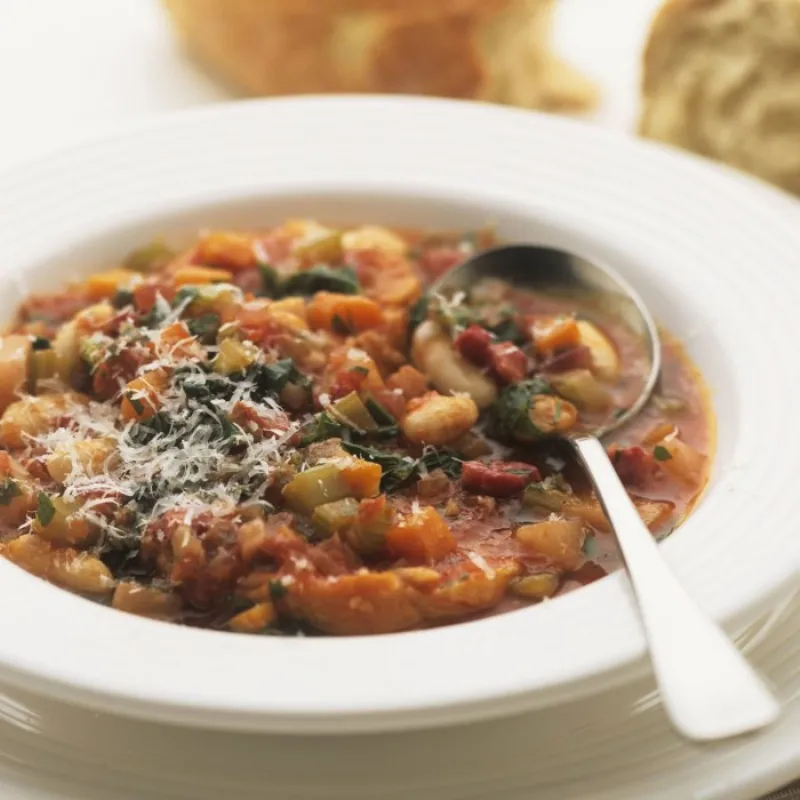
History & Origin
Ribollita originates from Tuscany, Italy, where it was created in the 18th century as a way to make use of leftover ingredients, particularly stale bread. This dish is a prime example of peasant cuisine, reflecting the resourcefulness of rural Italians who sought to avoid food waste. The name "ribollita" translates to "reboiled" in Italian, highlighting the practice of reheating the soup to enhance its flavors. Over time, it evolved into a beloved staple of Italian households, celebrated for its heartiness and warmth.
Nutritional Values
Ribollita is not only delicious but also packed with nutrients. Here’s a breakdown of its nutritional values per serving:
- Calories: 300
- Protein: 12g
- Fat: 10g
- Carbohydrates: 45g
- Fiber: 12g
- Sugar: 4g
- Sodium: 600mg
Rich in vitamins and minerals from the vegetables and beans, Ribollita offers a balanced meal option that is both filling and nutritious.
Recipe & Ingredients
To make a traditional Ribollita, gather the following ingredients:
- 4 cups of vegetable broth
- 2 cups of kale, chopped
- 1 cup of cannellini beans, cooked
- 1 onion, diced
- 2 carrots, diced
- 2 celery stalks, diced
- 2 cloves of garlic, minced
- 4 cups of stale bread, torn into pieces
- 3 tablespoons of olive oil
- Salt and pepper to taste
In a large pot, heat the olive oil over medium heat. Add the onion, carrots, and celery, sautéing until tender. Stir in the garlic, kale, and beans, cooking until the kale wilts. Pour in the vegetable broth and bring to a simmer. Add the stale bread, allowing it to absorb the flavors. Season with salt and pepper. Simmer for about 20 minutes, stirring occasionally. Serve hot, drizzled with a touch of olive oil for richness.
Hungry for more?
Explore thousands of insights across all categories.