
Mysterious artifacts from Mars: What recent findings at Gale Crater reveal about ancient microbial life
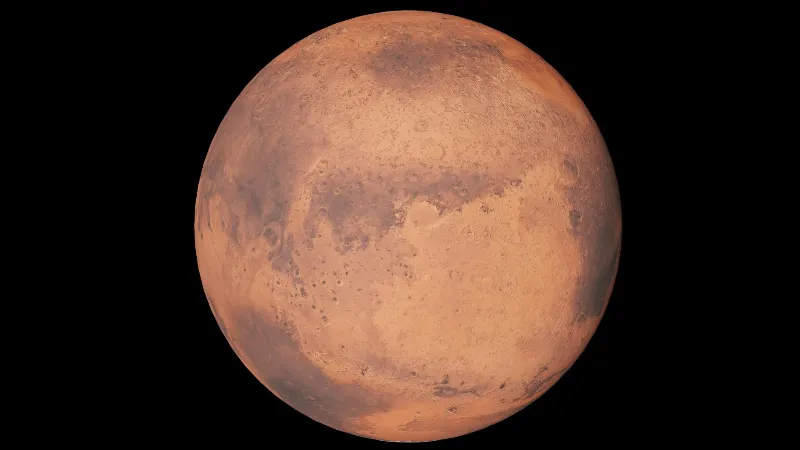

Artifacts Discovered at Gale Crater
NASA's Curiosity rover has unearthed compelling artifacts at Gale Crater, which is located at approximately 5.4°S latitude and 137.4°E longitude. These findings suggest that ancient Mars was once home to conditions conducive to microbial life.
Key Discoveries
- Organic molecules identified in sedimentary rock layers.
- Evidence of ancient water activity, including minerals like hematite and clays.
- Structures resembling microbial mats detected in rock samples.
Curiosity's instruments, such as the Sample Analysis at Mars (SAM), have detected complex organic compounds. This discovery is monumental.
“We’re looking at a history of water on Mars that could have supported life,” stated Dr. John Grotzinger, lead scientist of the Curiosity mission.Microbial Life Hypotheses
Imagine this: tiny microbial communities thriving in Martian lakes billions of years ago. The artifacts found suggest that Gale Crater was once a habitable environment. Researchers are piecing together the evidence to understand how life could have existed.
Geological Context
Gale Crater itself is about 154 kilometers in diameter. It features a central peak called Mount Sharp, rising over 5 kilometers high. Layers of sedimentary rock in this region hold secrets of the planet's past climate.
- Mount Sharp's stratigraphy reveals a timeline of environmental changes.
- Mineral deposits indicate the presence of ancient lakes.
- Isotopic analyses hint at biological processes that could have occurred.
These geological features are not just stunning landscapes; they are windows into a time when life may have flourished on Mars.
Future Research Directions
What's next? Further exploration is critical. Upcoming missions aim to gather more samples and analyze them for biosignatures.
- Perseverance rover's mission includes sample collection for potential return to Earth.
- Future landers are planned to target other ancient lakebeds across Mars.
- Collaboration with astrobiologists will enhance the search for signs of life.
Implications for Astrobiology
The findings from Gale Crater challenge our understanding of where life can exist. If microbial life thrived in Martian lakes, could similar conditions exist elsewhere in the solar system? Researchers are now looking beyond Mars, considering moons like Europa and Enceladus as potential habitats. New technologies in spectroscopy and sample return missions will aid this quest. The stakes are high, understanding life’s resilience could reshape our approach to extraterrestrial exploration.
Hungry for more?
Explore thousands of insights across all categories.
