
How Paper Revolutionized Learning in the Islamic Golden Age

Entering a New Era of Knowledge
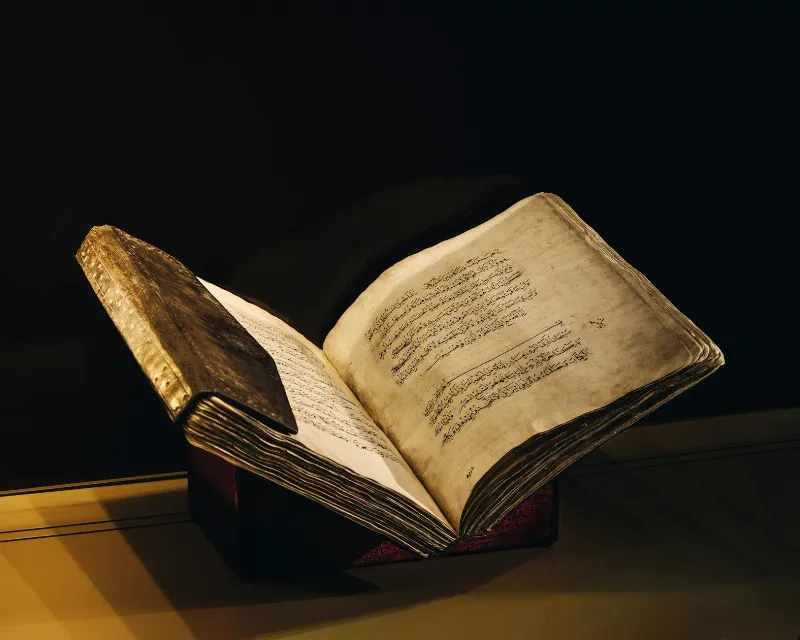
Within the bustling markets of Baghdad, a new material began to emerge, transforming the way knowledge was recorded and shared. Merchants and scholars alike marveled at the lightweight sheets that could absorb ink more effectively than papyrus or parchment. This innovation, introduced from China, was not just a practical solution; it heralded a revolution in the way ideas were documented and disseminated.
From East to West: The Journey of Paper
The journey of paper to the Islamic world is a tale woven through trade routes and cultural exchanges. In the 8th century, the Abbasid Caliphate sought knowledge from various cultures, including the Chinese, who had perfected the art of paper-making. The capture of Chinese paper-makers during the Battle of Talas in 751 CE marked a key turning point. Their skills were shared, leading to the establishment of paper mills in cities like Samarkand and Baghdad.
This technological exchange did more than enhance the production of texts; it ignited a passion for scholarship. Libraries flourished, and scholars began to translate and preserve works from Greek, Persian, and Indian sources. This intellectual melting pot led to advancements in mathematics, astronomy, and medicine, driven by the accessibility of written works.
Shifting Cultural Paradigms
As paper became more widely available, literacy rates climbed. The ability to produce books at a lower cost democratized knowledge, allowing not only the elite but also merchants and artisans to engage with text. This shift had profound implications for the culture of the Islamic world. Knowledge was no longer the exclusive domain of the few; it became a shared resource that fostered discussion, debate, and innovation.
With the rise of paper, a new literary culture emerged. Poets, philosophers, and scientists communicated their ideas through written word, leading to a rich tapestry of literature that defined the era. The effect was not merely academic; it influenced everyday life, creating a society increasingly oriented toward inquiry and learning.
By the end of the 12th century, the influence of paper had spread to Europe, laying the groundwork for the Renaissance. The medium that began as a practical tool in the Islamic Golden Age soon became a pillar of Western education and literature, proving that a simple sheet of paper could change the course of history.
Hungry for more?
Explore thousands of insights across all categories.
