
Deep Reinforcement Learning: What It Is and Its Role in Robotics
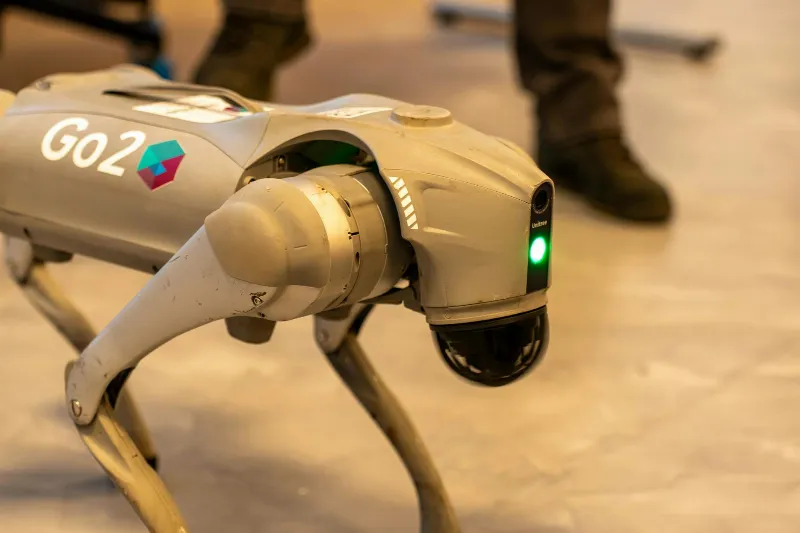

Understanding Deep Reinforcement Learning
Deep reinforcement learning (DRL) is a blend of two powerful concepts: deep learning and reinforcement learning. In essence, it enables machines to learn optimal behaviors by interacting with their environments. Unlike traditional machine learning approaches, which rely on labeled datasets, DRL empowers algorithms to make decisions based on trial and error. As a robot engages with its surroundings, it receives feedback in the form of rewards or penalties, guiding its learning process.
Applications of Deep Reinforcement Learning in Robotics
DRL is revolutionizing robotics by enhancing how machines perceive and interact with the world. Here are a few notable applications:
- Autonomous Navigation: Robots can learn to navigate complex environments, avoiding obstacles and optimizing their paths without human intervention.
- Manipulation Tasks: In industrial settings, robots equipped with DRL can adapt their grip strength and movements to handle various objects, improving efficiency and safety.
- Collaborative Robotics: DRL allows robots to work alongside humans, learning from their actions to perform tasks more effectively in shared spaces.
The implications of DRL in robotics extend beyond technical advancements. This technology fosters a new era of automation, where machines can adapt to unforeseen challenges, potentially reshaping industries like manufacturing, healthcare, and logistics.
Challenges and Considerations
While the potential of DRL in robotics is vast, it is not without challenges. Training models can be resource-intensive and time-consuming, requiring significant computational power and data. Additionally, ensuring safety and reliability in real-world applications remains a priority, as robots must navigate unpredictable environments without human oversight.
As deep reinforcement learning continues to evolve, its integration into robotics will likely bring about more sophisticated systems capable of learning and adapting in real-time. This ongoing development raises important questions about the future of work, ethics, and the relationship between humans and machines.
Hungry for more?
Explore thousands of insights across all categories.
