
Common Misconceptions About Blue's Origins in Nature

Blue's Rarity in Nature
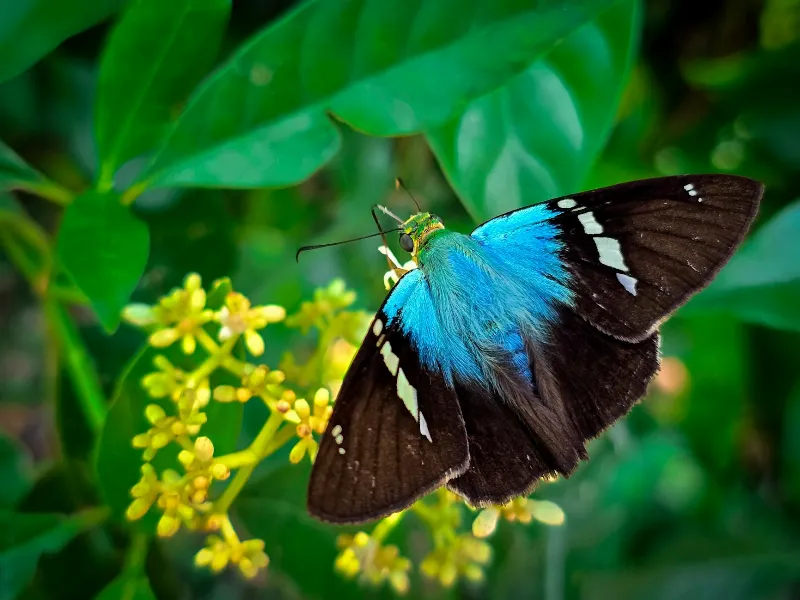
Blue is often perceived as a rare color in the natural world, leading to the misconception that it is mainly the result of human intervention. In fact, true blue colors arise from specific structural properties rather than traditional pigments. This means that rather than being a common pigment found in plants and animals, blue is achieved through unique light interference and scattering techniques.
Mechanisms Behind Blue
One of the most intriguing aspects of blue in nature relates to how light interacts with materials. In many blue flowers, such as the blue cornflower or the butterfly pea, the blue appearance is due to microscopic structures that reflect certain wavelengths of light. This phenomenon is known as structural coloration and can be observed in various creatures, including blue jays and morpho butterflies. These vibrant displays often serve critical functions in attracting pollinators or mates, showcasing a fascinating intersection of beauty and biology.
Interestingly, blue pigments do exist, but they are much rarer than those for other colors. For example, the pigment indigo has been used historically but is not produced naturally by many organisms. This rarity adds to the allure and mystery surrounding natural blue hues.
Examples of Natural Blue
- Blue flowers: Certain species exhibit blue due to structural coloration.
- Blue animals: Birds like blue jays and butterflies showcase vibrant blue through microscopic structures.
- Blue minerals: Some stones, such as lapis lazuli, contain natural blue pigments.
Understanding the mechanisms of blue not only enriches our appreciation of nature but also highlights the complexity of color as a biological tool. Each instance of blue in the environment reveals a story of evolution, adaptation, and survival.
As we explore the natural world, the color blue invites us to reconsider our perceptions and understand the intricate ways in which life expresses itself.
Hungry for more?
Explore thousands of insights across all categories.
