
Asteroid City - Wes Anderson


Setting and Atmosphere
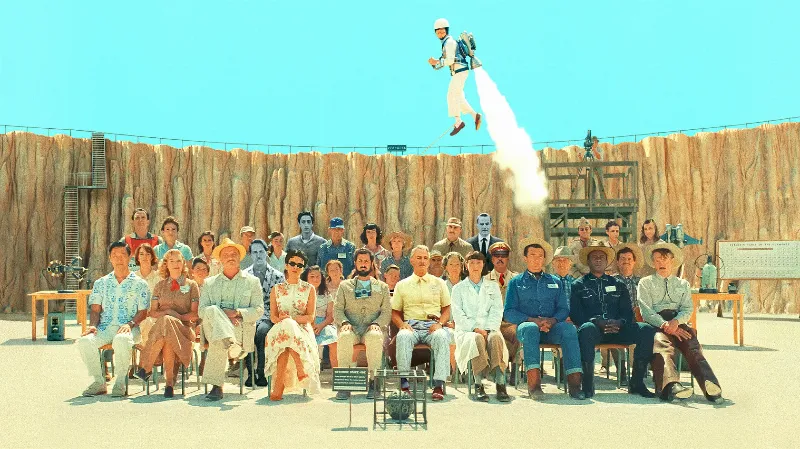
Asteroid City unfolds in a charming and quirky desert town, capturing the essence of 1955 America. The visual palette is distinctly Anderson, with pastel colors and meticulously crafted sets that evoke a sense of nostalgia and whimsy. The film revolves around a Junior Stargazer/Space Cadet convention, where the excitement of young minds is palpable. However, this seemingly innocent gathering is soon disrupted by unforeseen events that challenge the characters' perceptions of their reality.
Main Characters and Motivations
At the heart of the narrative is Augie Steenbeck, played by Jason Schwartzman. As a grieving father, Augie's motivations are deeply rooted in his desire to connect with his children while navigating his own sense of loss. He encounters a variety of eccentric characters, including Midge Campbell, portrayed by Scarlett Johansson, who adds a layer of complexity to the story. Midge's journey as an actress reflects the film's exploration of identity and the human experience. The ensemble cast, including Tom Hanks and Tilda Swinton, contributes to a rich tapestry of interactions that highlight the absurdity and beauty of life.
Plot Developments
The film’s narrative takes a turn as world-altering events unfold, challenging the characters to confront their fears and uncertainties. Augie and Midge, among others, find themselves searching for meaning amidst chaos, leading to moments of introspection and unexpected connections. The convention, meant to be a celebration of curiosity and wonder, morphs into a backdrop for exploring deeper themes of love, loss, and the human condition. Each character's arc intertwines seamlessly, creating a narrative that is both engaging and thought-provoking.
Thematic Depth
Asteroid City delves into themes of connection, existential inquiry, and the absurdity of life. The film juxtaposes the innocence of youth with the complexities of adult emotions, crafting a narrative that resonates on multiple levels. As characters face their dilemmas, the film poses questions about fate, choice, and the nature of reality, leaving a lingering sense of wonder. The conclusion, while not explicitly resolved, invites viewers to reflect on their own journeys and the moments that define them.
Hungry for more?
Explore thousands of insights across all categories.
